Performance Services & Recovery
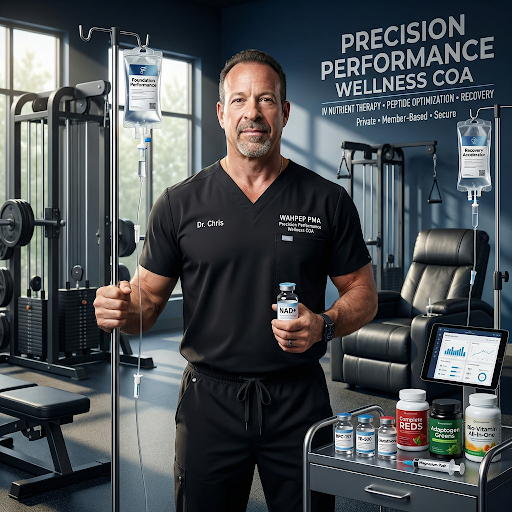
Precision IV protocols specifically designed for athletes, high performers, and anyone seeking peak physical and mental readiness.

Performance and recovery support at WAHPEP is about restoring what training, travel, and stress deplete — hydration, micronutrients, sleep quality, and cellular energy — so you rebuild instead of grinding down. Guided recovery is planned, measured, and personal, not guesswork between hard weeks. Members use it to sustain output over years, not just weeks.
Why Do High Performers Need Recovery Support?
High performers need recovery support because hard training, travel, and stress deplete the body faster than food and sleep alone can replace. Targeted recovery restores what output costs you.
Energy & Burnout Recovery
- Mental clarity
- Sustained energy
- Reduced fatigue
Energy Revitalization • Comprehensive Wellness
Fitness & Athletic Performance
- Faster recovery
- Reduced inflammation
- Improved endurance
Foundation Performance • Recovery Accelerator • Elite Athlete
Immune & Wellness Support
- Immune resilience
- Antioxidant protection
- Deep hydration
Foundation Wellness • Recovery & Restoration
What Makes PPWCOA Performance Recovery Different?
PPWCOA Performance Recovery is different because protocols are timed to your training calendar — recovery within 24–48 hours of a hard block, readiness one to two days before competition — using pharmaceutical-grade formulations and physician-led guidance.
- Pharmaceutical-grade nutrients and formulations
- Customized protocols tailored to your goals
- Holistic wellness evaluation option available
- Private, calm wellness environment
- Part of the WAHPEP private wellness community
Who Is Performance & Recovery Support Ideal For?
Performance and recovery support is ideal for busy professionals, athletes and fitness enthusiasts, frequent travelers, and anyone who trains hard and wants to bounce back faster — no elite athlete status required.
Ready to Perform at Your Best?
Schedule a strategy session and discover the right performance protocol for you.
Book Your Performance ConsultationHow Does Guided Recovery Compare to Just Pushing Through?
Pushing through treats fatigue as a willpower problem; guided recovery treats it as a signal. The table compares what changes when recovery is planned instead of improvised.
| What Changes | Pushing Through | Guided Recovery at WAHPEP |
|---|---|---|
| Approach to fatigue | Ignore it and add more caffeine | Read it as data and address the root cause |
| Hydration & nutrients | Whatever you remember to take | Targeted protocols matched to training load |
| Recovery between efforts | Unpredictable and often incomplete | Planned around your calendar and hard blocks |
| Sleep and energy | Declines across the season | Supported so output holds later into the season |
| Injury and burnout risk | Rises as load accumulates | Managed by adjusting cadence before you break down |
| Guidance | Trial and error from the internet | One-on-one guidance from Dr. Chris and the team |
Educational wellness guidance shared member-to-member. Not medical advice.
What Are the Steps to Build a Recovery Plan?
Building a recovery plan takes five steps: map your load, identify the limiter, match a protocol, time it around your calendar, and track and adjust.
- 1
Map your load
We look at training volume, travel, sleep, and stress to see what your body is actually recovering from.
- 2
Identify the limiter
Fatigue, soreness, poor sleep, and slow rebound each point to different root causes — we name yours before adding anything.
- 3
Match a performance protocol
Hydration, cellular energy, and recovery support are selected to address the limiter, not a generic checklist.
- 4
Time it around your calendar
Sessions are scheduled before big efforts and after hard blocks or travel, so support lands when it counts.
- 5
Track and adjust
We review how you feel, train, and sleep, then adjust cadence and protocol as your season changes.
Performance & Recovery Frequently Asked Questions
References & Primary Sources
- Hydration status and endurance exercise performance. Sports Medicine (PubMed: 25945668), 2015.
- Exercise-Associated Muscle Cramps and electrolyte balance. Sports Health (PMC: PMC3435910), 2012.
- Dietary Supplements for Exercise and Athletic Performance. NIH Office of Dietary Supplements, 2023.
- Sleep and Athletic Performance: recovery, injury risk, and readiness. Current Sports Medicine Reports (PubMed: 28708702), 2017.
- Physical Activity Guidelines for Americans, 2nd edition. U.S. Department of Health and Human Services, 2018.
Educational references only. Nothing here is medical advice, diagnosis, or treatment.

Written and reviewed by Christopher Lucchese
Former trauma surgeon with 25+ years in surgical and integrative wellness practice · Founder, WAHPEP
Last reviewed: August 2026
Continue Exploring WAHPEP
Related pages to help you find the path that fits where you are right now.